
Changing a flat tire might seem hard, but it’s doable with the right help. Knowing when you have a flat tire is the first step to being ready on the road.
This guide will show you how to change a flat tire in nine simple steps. By following these steps, you’ll feel more confident when dealing with a flat tire.
Learning to change a tire is a key skill for drivers. With this guide, you’ll be on your way to becoming a pro at it.
Table of Contents
Key Takeaways
- Understand the signs of a flat tire
- Learn the nine easy steps to change a flat tire
- Gain confidence in handling a flat tire situation
- Master the essential skill of tire changing
- Become self-sufficient on the road
Recognizing the Signs of a Flat Tire
Every driver needs to know the signs of a flat tire to stay safe on the road. A flat tire can show itself in many ways. Spotting these signs early can help you act fast.
Visual Indicators of a Deflated Tire
A flat tire is easy to spot if it’s visibly deflated. Regular checks can catch any problems early. Look for tires that seem too low or have damage.

Changes in Vehicle Handling and Performance
A flat tire can make your car pull to one side or feel off when steering. It can also cause vibrations or strange noises while driving.
Dashboard Warning Lights and Tire Pressure Monitoring Systems
Today’s cars have Tire Pressure Monitoring Systems (TPMS) that warn of underinflated tires. If the TPMS light comes on, it means one or more tires are low.
| Signs of a Flat Tire | Description |
|---|---|
| Visibly Deflated Tire | A tire that appears underinflated or damaged upon visual inspection. |
| Changes in Handling | The vehicle pulls to one side, or there’s an unusual vibration while driving. |
| TPMS Warning Light | The Tire Pressure Monitoring System light on the dashboard is illuminated. |
By knowing these signs, you can quickly fix a flat tire. This keeps you safe on the road.
Safety First: Finding a Secure Location
Your safety is the most important thing. So, find a safe spot before you try to change a flat tire. Look for a place that’s away from traffic and any dangers.
Identifying Safe Stopping Areas on Different Road Types
On highways or busy roads, signal your move and slowly pull over. On quieter roads, find a flat, stable spot away from traffic. Stay away from soft ground like sand or mud, as it can make your car unstable.
Using Hazard Lights, Reflective Triangles, and Other Warning Devices
After stopping, turn on your hazard lights to warn others. Use reflective triangles or flares around your car to make it more visible, mainly at night. This helps keep your car safe from passing drivers.

Proper Vehicle Positioning for Maximum Safety
Put your car on a level surface and lock the parking brake. If you’re on a slope, turn your wheels towards the curb or the side of the road. This stops your car from rolling. Also, think about your surroundings and place your car where it’s safest from passing traffic.
| Safety Measure | Description |
|---|---|
| Hazard Lights | Alert other drivers to your stopped vehicle |
| Reflective Triangles | Increase visibility, specially in low light |
| Proper Vehicle Positioning | Ensure the vehicle is on a level surface and secure |
Gathering the Essential Tools and Equipment
To change a flat tire safely and efficiently, you’ll need the right tools and equipment. Having them ready will make the process less stressful. It will also help you get back on the road quickly.
Standard Tire-Changing Tools in Your Vehicle
Most vehicles come with the basic tools for changing a flat tire. These include a lug wrench (or tire iron), a spare tire, and a jack. It’s important to know where these tools are and if they’re in good condition.
Additional Helpful Items to Keep in Your Emergency Kit
Consider adding an emergency kit to your vehicle. It should include a tire pressure gauge, wheel chocks, and a flashlight. These items can be very helpful in a flat tire situation.
Locating the Spare Tire and Jack in Different Vehicle Types
The location of the spare tire and jack varies by vehicle make and model. Check your owner’s manual to find out where they are in your vehicle.
By gathering the necessary tools and equipment, you’ll be ready to change a flat tire.
Preparing Your Vehicle Before You Change a Flat Tire
Getting your vehicle ready is key before you change a flat tire. It makes the process safer and more efficient. Before starting, take a few important steps to keep you safe and the job done right.
Engaging the Parking Brake and Turning Off the Engine
First, engage the parking brake to stop the car from moving. This is a must-do for safety. Then, turn off the engine and turn on the hazard lights. This warns other drivers about the situation.
Proper Wheel Chock Placement for Vehicle Stability
If you’re on a slope, use wheel chocks for extra safety. Put them on the opposite wheel to stop rolling. This is very important on hills or uneven ground.
Removing Hubcaps or Wheel Covers Without Damage
Before loosening the lug nuts, you might need to take off the hubcap or wheel cover. Use a hubcap removal tool to remove it carefully. Be gentle to avoid damaging the hubcap or wheel.
Checking Your Spare Tire’s Condition Before Installation
Before putting on the spare tire, check its condition. Make sure it’s inflated to the right pressure. You can find this on the tire’s sidewall or in your car’s manual.
By doing these steps, you’ll be ready to change your flat tire safely and efficiently.
How to Properly Loosen the Lug Nuts
Changing a flat tire starts with loosening the lug nuts. This step needs your full attention. Make sure you’re in a safe spot and the parking brake is on.
Using the Lug Wrench with Proper Technique and Body Positioning
To loosen lug nuts, use the lug wrench right. Stand over the nut and place the wrench for leverage. This method helps loosen the nut better.
The Correct Loosening Sequence and Direction
Loosen lug nuts in a star pattern for even pressure. Turn the wrench counterclockwise to loosen. Loosen them before jacking up the vehicle.
Strategies for Dealing with Overtightened or Rusty Lug Nuts
Overtightened or rusty lug nuts need extra effort. Use a breaker bar for more power or penetrating oil for rust. Be careful not to damage the threads.

Here are some tips for loosening lug nuts:
- Use the right lug wrench size to avoid damage.
- Apply penetrating oil to rusty nuts before loosening.
- Loosen in a star pattern for even pressure.
By following these steps and tips, you can loosen lug nuts safely. This makes changing your flat tire easier.
Safely Jacking Up Your Vehicle
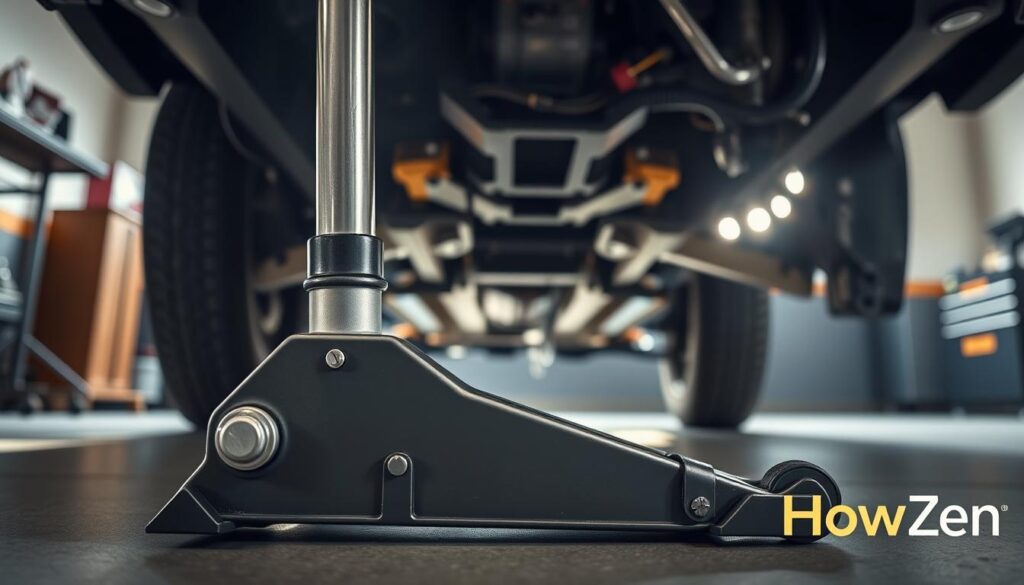
Jacking up your vehicle is a key step in changing a flat tire. It needs careful attention to safety and the right technique. This process requires patience and a good understanding of the steps to avoid accidents and injuries.
Locating the Proper Jack Points for Your Specific Vehicle
Before you jack up, find the right jack points on your vehicle. These points are made to hold the vehicle’s weight and are marked in your owner’s manual. Checking the manual is key because jack points differ between models.
Positioning and Operating Different Types of Car Jacks
There are many car jacks, like scissor jacks, bottle jacks, and floor jacks. Each has its own way of working, and knowing how to use yours is important. For example, a scissor jack needs you to turn a handle to lift the vehicle. A bottle jack is raised by pumping a lever.
Safety Precautions While Your Vehicle Is Elevated
When your vehicle is raised, safety is top priority. Make sure it’s on a firm, level surface and apply the parking brake. Never stand under the vehicle while it’s only on a jack; use jack stands for safety.
How High to Raise Your Vehicle for Tire Removal
The height needed to raise your vehicle depends on the tire size and clearance needed. Raise it just enough to clear the tire from the ground.
“The key to safe jacking is to raise the vehicle only as high as necessary to accomplish the task at hand.”
This keeps the vehicle from falling off the jack.
By following these steps and taking the right precautions, you can safely jack up your vehicle and change the flat tire.
Removing the Flat Tire and Mounting the Spare
Changing a flat tire starts with removing the damaged tire and putting on the spare. This step is critical for safety. It ensures the spare is securely in place and the vehicle is ready to drive.
Techniques for Safely Removing the Damaged Tire
To remove the flat tire, loosen the lug nuts first. Then, pull the tire straight off the wheel hub. If it’s stuck, gently wiggle it to free it.
Inspecting the Wheel Hub, Studs, and Brake Components
Before putting on the spare, check the wheel hub, studs, and brakes. Make sure the hub is clean and the studs are in good shape. Also, ensure the brake components are not damaged or in the way.
Aligning and Mounting the Spare Tire Correctly
Place the spare tire on the wheel hub and hand-tighten the lug nuts. Make sure it’s aligned right and the lug nuts are snug. Then, tighten them in a star pattern with your lug wrench.
Handling Different Types of Spare Tires (Full-Size vs. Compact)
Knowing your spare tire type is key. Full-size spares are for longer use and normal speeds. Compact spares are for short-term use and low speeds. Always check your owner’s manual for specific guidance.
| Spare Tire Type | Driving Speed | Duration of Use |
|---|---|---|
| Full-Size | Normal speeds | Extended periods |
| Compact | Low speeds | Temporary use |
Securing the Spare and Lowering the Vehicle
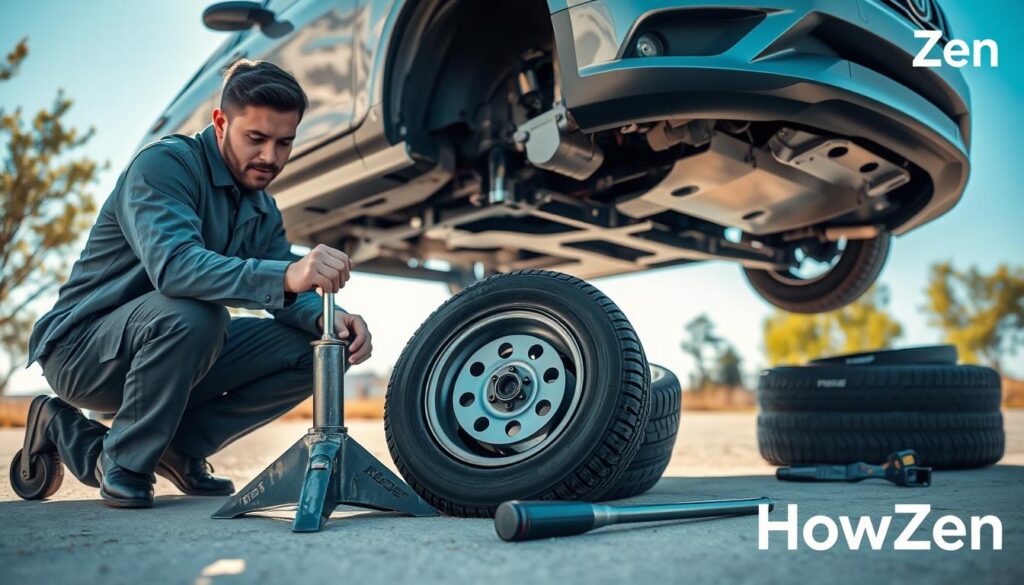
After mounting the spare tire, securing it and lowering your vehicle are key steps. These steps are vital for your safety and the safety of others.
Hand-Tightening Lug Nuts in the Correct Star Pattern
Start by tightening the lug nuts in a star pattern. This pattern prevents wheel damage and ensures the tire is tight. Tighten them snugly, but don’t overdo it.
Safely Operating the Jack to Lower Your Vehicle
Lower your vehicle carefully with the jack, keeping it stable. Make sure the area is clear and watch your surroundings.
Final Tightening with the Lug Wrench to Proper Torque
When the vehicle is back on the ground, tighten the lug nuts with the lug wrench. Use the proper torque specification from your vehicle’s manual.
Double-Checking Your Work for Safety
After tightening, double-check your work. Make sure the spare tire is right and the lug nuts are even.
By following these steps, you ensure your safety and your vehicle’s safety after a flat tire change.
Conclusion: After You’ve Changed Your Flat Tire
After changing your flat tire, it’s important to check the spare tire’s pressure. Then, drive carefully to a tire repair shop. There, you can have the flat tire fixed or replaced.
Tire safety is very important. Knowing how to maintain your tires can prevent flat tires in the future. Check your tire pressure, tread depth, and look for signs of wear regularly.
By following this guide, you’re now ready to handle a flat tire situation with confidence. Always be prepared to stay safe on the road. Make sure to check your spare tire often and keep your tools in good shape.
FAQ
What are the signs of a flat tire?
Signs include a visibly deflated tire and changes in how your car handles. You might notice it pulling to one side. Also, dashboard lights that warn about tire pressure are a sign.
How do I find a safe location to change a flat tire?
Look for a flat, stable spot away from traffic. Turn on your hazard lights and use reflective triangles to warn others.
What tools do I need to change a flat tire?
You’ll need a spare tire, jack, and lug wrench. You might also need a tire pressure gauge and wheel chocks.
How do I loosen the lug nuts on a flat tire?
Use the lug wrench correctly. Stand in the right position and loosen the lug nuts in the right order and direction.
How high should I raise my vehicle when changing a flat tire?
Raise your vehicle enough to remove the flat tire. But always follow the manufacturer’s guidelines for jacking points and height.
How do I properly secure the spare tire?
Hand-tighten the lug nuts in a star pattern. Then, lower the vehicle and tighten them to the correct torque.
What should I do after changing a flat tire?
Check the spare tire’s pressure. Then, drive carefully to a tire repair shop to have the flat tire fixed or replaced.
Can I use a compact spare tire for an extended period?
No, compact spare tires are for temporary use only. Always check your vehicle’s manual for guidance on their use.
How can I prevent flat tires in the future?
Regular tire maintenance is key. Check tire pressure and inspect tires for damage to prevent flat tires.